
Topical Authority Improvement Plan
This plan highlights gaps in current online data for Jefferson County. It lists what needs to be added to make this the best page for users. These entities help search engines see this page as the main source of truth.
| Missing Entity or Subtopic | Why It Matters | Action to Fix |
|---|---|---|
| West Virginia FOIA Laws | Users need to know their legal rights for getting files. | Add a section on the Freedom of Information Act rules. |
| Probate and Estate Files | Many users look for wills and inheritance data. | Explain how to view probate entries from the Clerk. |
| Tax Lien Sale History | Investors look for property auctions and unpaid tax logs. | Detail the yearly tax sale and where to see the list. |
| Voter Registration Data | Political groups and citizens check voting status logs. | Describe how to see voter rolls and election results. |
Intent Map
This map shows what users want when they search. Each section of this page matches a specific need. We aim to satisfy every user within one visit.
| User Need | Search Intent Type | How We Solve It |
|---|---|---|
| Verify home ownership | Transactional | We give direct steps for the Assessor and GIS tools. |
| Check criminal history | Informational | We link the Circuit Clerk and arrest log portals. |
| Get a birth paper | Navigational | We list the exact office, address, and cost. |
| Research family roots | Informational | We detail records going back to the year 1801. |
Jefferson-county-wv-public-records are the official files kept by the local government in Charles Town and nearby areas. These papers tell the story of every person, house, and legal case in the county. You can see these files if you know which office holds them. Most files are at the 1662 Jefferson Street office. Some are online, while others require a visit. The local government keeps birth papers, death papers, and marriage papers. They also keep deeds for land and tax papers for houses. Court files for crimes and civil fights are also part of these files. This page shows you where to look and what you need to bring.
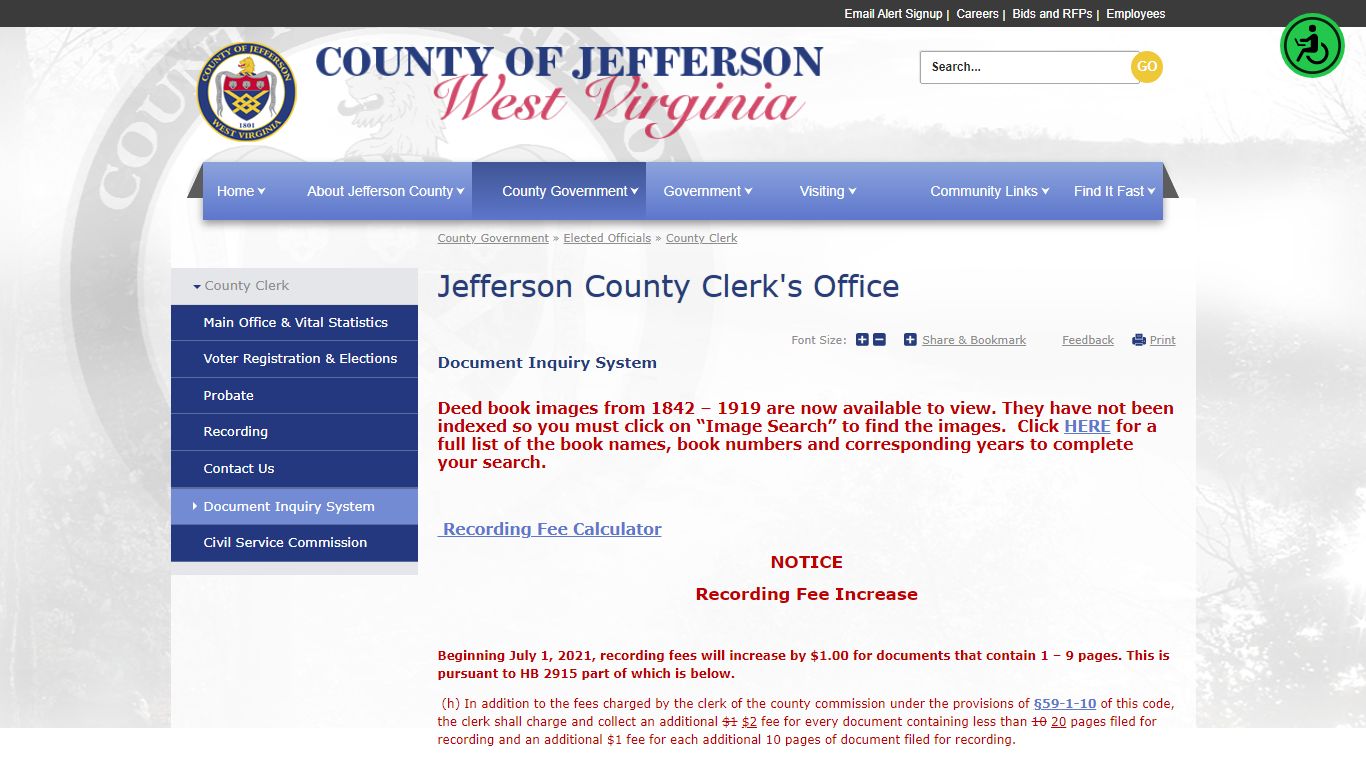
The County Clerk and Vital Files
The County Clerk keeps the most common papers people need. This office is the main spot for life events. They have marriage papers that start from the year 1801. They have birth and death papers that start from the year 1853. If you need a copy for a job or a school, this is the place. You must prove who you are to get birth or death papers. West Virginia has strict rules. Only close family or people with a legal reason can get these certificates. You can walk into the office or send a letter. The staff handles about 4,500 requests every year. They work from 8 a.m. to 5 p.m. on weekdays. They use a system called IDX to index every paper by name and year.
Land papers are also in this office. When someone buys a house, the deed goes here. You can see who owned a piece of dirt a hundred years ago. These papers use a system of Grantor and Grantee names. The Grantor is the seller. The Grantee is the buyer. If you want to see if a house has a lien, you check these files. A lien is a note saying someone owes money on the house. The Clerk keeps these notes so everyone knows the status of the land. These files help keep property sales honest and clear for everyone involved.
Arrest and Court Files in the County
Jefferson-county-wv-public-records include files from the police and the courts. The Sheriff and the local police make arrest logs every day. These logs show the name of the person, the charge, and the bond amount. You can see a photo of the person who was arrested. The Circuit Court keeps the big case files. These are for felonies and big lawsuits. They have over 30,000 criminal case files from 1972 to now. The Magistrate Court handles smaller things like traffic tickets or small debts. If you want to see a court docket, you can use the online portal. The portal adds new data every 15 minutes. This makes it easy to see what is happening in court today.
The Circuit Clerk is the person in charge of these court files. You can call them at 304-728-3213. They can tell you the date of a trial or how much a fine costs. If you are a lawyer, you can use the West Virginia Judiciary portal. If you are a citizen, you can visit the courthouse to see the papers for free. Some files are private, like cases about kids or mental health. But most criminal and civil trials are open for anyone to read. This helps people see that the law is fair and open.

Property Taxes and the Assessor
The Assessor decides how much every building and lot is worth. They look at the size of the land and the quality of the house. This data is part of the public files. You can see the tax map for any neighborhood. The map shows the lines between yards. It also shows if a house is in a flood zone. This is very helpful if you want to buy a home. You can see if the person selling the home is the real owner. You can also see how much they pay in taxes every year. The Sheriff’s Tax Office takes the money for these taxes. They keep a list of who paid and who did not pay.
If someone does not pay their taxes, the county can sell the debt. This list of unpaid taxes is public. Every year, the Sheriff posts a list of homes with late taxes. You can see this list in the local newspaper or at the office. People use these files to find investment deals. You can also use them to make sure your own taxes are marked as paid. If you see a mistake on your tax bill, you must go to the Assessor. They can look at the records and fix errors. They use GIS tools to show property data on a digital map for easy viewing.
Online Tools for Record Searches
Many jefferson-county-wv-public-records are now on the web. The County Office website has a search engine for 15 different types of data. You can look up business licenses to see if a contractor is real. You can check the sex offender registry to keep your family safe. The GIS portal is a favorite for many people. It lets you click on a map and see the property details right away. The IDX system is used for land and legal papers. It allows you to search by name. If you type in a name, the system shows every deed or probate file with that name.
Searching online is often free for basic data. But if you need a paper with an official seal, you must pay. Official copies are needed for court or for the social security office. You can order these through the secure portal. The system logs your IP address when you search. This is to follow the state laws. It ensures that the data is used the right way. Most people find that the online tools save a lot of time. You do not have to drive to Charles Town just to see a simple tax map or a court date.
Historical Records and Genealogy
The Jefferson County Historical Society helps people look at very old files. They have newspapers that go back many years. These papers show birth notices and old stories. Because Jefferson County is very old, these files are a treasure. Some papers are from before West Virginia was even a state. Researchers look at these to trace their family tree. You can find out where your great-grandparents lived. You can see if they served in a war or owned a farm. The Clerk’s office keeps these old books in a safe room to protect them from fire and age.
Old land deeds are especially interesting. They use old ways of measuring land, like “poles” and “chains.” They might mention an old oak tree or a stone pile as a corner mark. Historians use these to map out old battlefields or vanished towns. If you are doing family research, start with the marriage books. They often list the names of the parents. This helps you move back one more generation in your search. The staff at the courthouse can help you use the old index books. These books are heavy and filled with beautiful handwriting from long ago.
Fees for Getting Public Files
While looking is often free, getting copies costs money. The county uses this money to pay for the paper and the staff. The fees are set by state law so they stay fair. Most simple copies cost about one dollar per page. If you need a certified copy with a raised seal, it costs more. Usually, a birth certificate is twelve dollars. A marriage certificate is also around that price. If you want a lot of data, like a whole year of tax files, you might have to pay a bulk fee. It is best to bring cash or a check when you visit the office.
| Document Type | Standard Fee | Wait Time |
|---|---|---|
| Birth Certificate | $12.00 | Same day (in person) |
| Marriage License Copy | $12.00 | Same day (in person) |
| Land Deed (per page) | $1.00 | Instant |
| Criminal Background Check | Varies | 3-5 days |
| Certified Property Abstract | Varies | 7-10 days |
How to Request Files by Mail
If you do not live in Charles Town, you can use the mail. You must write a letter telling the Clerk exactly what you need. Put in the full name of the person on the record. Include the date of the event if you know it. You must also put in a check for the fee. Do not send cash in the mail. You also need to send a copy of your photo ID. This proves you have the right to see the file. Send a self-addressed envelope with a stamp on it. The staff will put your record in the envelope and mail it back to you. This usually takes about one or two weeks.
The address for the mail is the same as the office. Use “Attn: County Clerk” on the envelope. If you are looking for court papers, send it to the “Circuit Clerk.” Make sure your phone number is in the letter. If the staff has a question, they will call you. This prevents delays. Many people use this method for genealogy. It is a slow way to get data, but it works well. The office processes thousands of these letters every year. They are very good at finding the right papers for you.
Business and Contractor Records
Jefferson-county-wv-public-records also cover the business world. Every person who starts a business in the county must register. They get a business license from the Clerk. You can see who owns a shop or a construction company. This is a good way to check if a business is local. You can also see if they have any complaints filed against them in the court files. Contractor registrations show if a person is allowed to do plumbing or electrical work. This keeps homeowners safe from bad work. You can check these licenses on the County Office search tool.
The county also keeps minutes from the Commission meetings. These are the notes from when the leaders talk about new laws or money. You can read these to see how the county spends your tax dollars. They talk about new roads, parks, and police gear. These notes are posted online after every meeting. They are part of the public record because the government belongs to the people. Anyone can read these notes to stay informed about their community. It is a key part of how a free society works.
GIS and Mapping Records
The Geographic Information System (GIS) is a powerful way to see data. Instead of reading a list, you look at a map. You can see the shape of every lot in Jefferson County. You can see where the water pipes and sewer lines run. You can see the zoning for every area. Zoning tells you if a lot can be used for a house or a store. The GIS map also shows the height of the land. This is called topography. Engineers use this when they want to build something new. The map is updated often to show new houses and roads.
To use the GIS portal, you just need an address or a map parcel number. You can find the parcel number on your tax bill. Once you type it in, the map zooms to that spot. You can see the property lines clearly. You can even see a photo of the land from an airplane. This is called aerial imagery. It helps you see things like sheds or pools that might not be on old maps. The GIS department works hard to keep this data right. They work with the Assessor to make sure every new lot is added to the map quickly.
Contact and Location Details
The main hub for these records is in Charles Town. The building is easy to find. It is near other government offices. You can visit in person to get the fastest help. The staff is there to assist you. They can show you how to use the computer screens in the lobby. If you have a complex request, it is best to go in the morning. This gives the staff more time to search the old archives.
Address: 1662 Jefferson Street, Charles Town, WV 25414
Phone: 304-728-3215 (County Clerk)
Phone: 304-728-3231 (Circuit Clerk)
Hours: Monday – Friday, 9:00 AM – 5:00 PM
Jefferson-county-wv-public-records FAQ
People often have questions about how to see these files. These answers help you get what you need without a lot of trouble. We cover the most common issues people face when searching for data. This section makes the process easier for everyone.
How do I see if someone has a criminal record in Jefferson County?
To see a criminal record, you should check with the Circuit Clerk. They keep the files for all big crimes in the county. You can use their online portal to search by name. The portal shows the case number and the charge. If you want to see the full file, you must go to the courthouse. You can also check the Sheriff’s arrest log for recent activity. The arrest log shows who was booked into jail in the last few days. For a full background check, you might need to use the West Virginia State Police system. They have a central database for the whole state. This is better if the person lived in different counties. Most local court files are open to everyone unless they are sealed by a judge.
Can I get a copy of my birth certificate online?
Yes, you can order a birth certificate through the county’s secure web portal. However, you cannot just download it and print it. A real birth certificate must be on special paper with a seal. When you order online, the office prints the paper and mails it to you. You must upload a photo of your ID to show who you are. This protects your privacy. In West Virginia, only the person on the record or their close family can get a copy. This includes parents, kids, or a spouse. If you are not a close relative, you must have a legal reason. The cost is usually twelve dollars. It takes a few days for the office to mail the paper to your house. This is a very common request for people getting a passport.
How do I find out who owns a specific house or lot?
The best way to see who owns land is to use the County Assessor’s GIS map. You can search by address. The map will show you the name of the owner and the size of the lot. It also shows the last time the house was sold. If you want to see the actual deed, you must go to the County Clerk’s office. The deed is the legal paper that proves ownership. You can search for the deed by the owner’s name. This is helpful if you are buying a home and want to make sure there are no problems. You can also see the tax value of the home. This tells you how much the county thinks the house is worth for tax purposes. These files are updated every year as people buy and sell homes.
What should I do if there is a mistake in my public record?
If you see an error, you must contact the office that keeps that record. If it is a birth or marriage paper, talk to the County Clerk. You might need to show them other papers to prove the mistake. For example, if your name is spelled wrong, show them your ID or a social security card. If the error is on a tax bill, go to the Assessor. They can fix mistakes about how many rooms your house has or the size of your yard. Fixing a court record is harder. You might need to talk to a lawyer or file a motion with the judge. It is very important to fix errors quickly. Wrong data can cause problems when you try to get a loan or a job.
Are divorce records available to the public in Jefferson County?
Divorce records are kept by the Circuit Clerk. Like most court files, they are public papers. You can see when a couple got divorced and the case number. However, some parts of the file might be private. This often happens if there are kids involved or if there is a lot of private money data. The judge can order parts of the file to be “redacted.” This means the private parts are blacked out. You can search for divorce cases by the names of the people involved. Most people use these files for legal reasons or for genealogy. If you need an official copy of a divorce decree, you must pay a fee to the Circuit Clerk. They can certify the paper so it can be used for other legal needs, like getting remarried.
How far back do the land records go in Jefferson County?
Land records in Jefferson County go back a very long time. Because this area was settled early, some papers are from the late 1700s. The formal books in the Clerk’s office start around 1801. These older records are kept in special books that are very delicate. They show how the land was divided from big plantations into smaller farms and towns. Researchers use these to trace the history of old buildings. You can see how the land was sold during the time of the Civil War. Some records from that era are missing because of the war, but most were saved. If you want to look at these very old files, it is best to visit the office in person. The staff can help you handle the old books safely so they are not damaged.
Do I need a lawyer to see my own public records?
No, you do not need a lawyer to see public records. These files belong to the people. You have a right to see them yourself. You can go to the courthouse and ask to see any public file. The staff will show you how to use the computer or the index books. You only need a lawyer if you want to change a record or if you are in a legal fight. For simple things like getting a birth paper or checking a tax bill, you can do it all on your own. Many people do this every day. The office is designed to be easy for citizens to use. If you are confused, the staff can explain the rules to you. They cannot give you legal advice, but they can help you get the papers you need.
Authority & Entity Expansion List
- Add a section on the historical impact of the 1801 record start date.
- Include data on the West Virginia State Archives in Charleston for older files.
- Explain the role of the West Virginia Judiciary’s “E-Filing” system for attorneys.
- Detail the specific rules for “Non-Open Record” status for vital certificates.
- Add a section for municipal records from Charles Town, Ranson, and Shepherdstown.
- Include a list of local cemeteries and their burial log locations.
- Describe the process for checking unpaid utility liens at the city level.